
Lift the Damn Weights: Why “Bulking Up” Isn’t the Problem You Think It Is
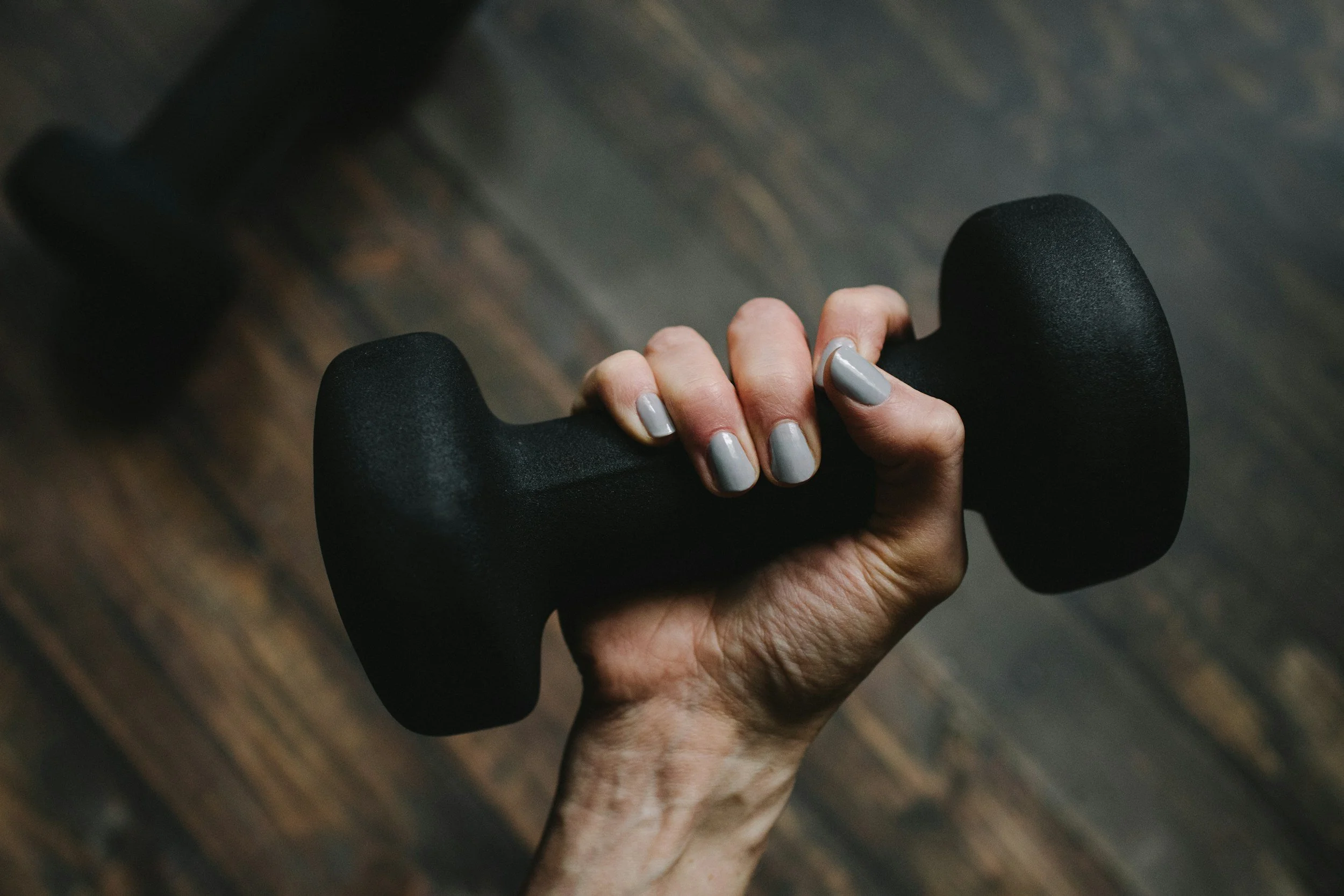
To the women who tell me they don’t want to “lift heavy” because they’re afraid they’ll “bulk up” — let me just say this upfront:
I have been actively trying to bulk up for years.
I lift heavy. I eat enough. I prioritize protein. I train with intention. And I promise you — it does not happen easily.
If getting bulky were that simple, every woman who accidentally picked up a dumbbell would be walking around looking like a professional bodybuilder. That’s just not how physiology works.
So let’s talk honestly about strength training, muscle, body composition, and why so many women have been misled about what it actually takes to be lean, strong, and healthy.
The Myth of “Toned” (And Why It’s Not a Real Thing)
Most women will say they want to look toned, lean, or defined — not muscular.
Here’s the truth: those words don’t describe different outcomes. They describe the same outcome, just framed in language that feels more socially acceptable for women.
What people call “toned” is simply:
Adequate muscle mass
Lower (but not too low) body fat
That’s it.
There is no special type of exercise that creates “long, lean muscle.” Muscle is muscle. You either build it or you don’t.
And building it requires you to leave behind a lot of outdated ideas about how women “should” eat and exercise — because those ideas are not going to get you where you think you want to go.
Muscle Takes Up Less Space Than Fat (Yes, Really)
One of the most important concepts that almost no one explains clearly is this:
A pound of muscle takes up less space than a pound of fat.
That means you could:
Stay the exact same weight
Build muscle
Lose fat
And end up wearing a smaller clothing size
Your body weight alone tells you almost nothing about your health or your appearance.
Which brings me to one of the biggest lies women have been sold…
The “Just Diet It Off” Fallacy
So many women are told to:
Eat in a calorie deficit
Count macros
Lose weight with the assumption that there’s a solid layer of muscle hiding underneath the fat — and once the fat is gone, the muscle will magically appear.
But what if that muscle was never built in the first place?
If you don’t have adequate underlying muscle, dieting doesn’t reveal it — it just makes you smaller, softer, and often more metabolically fragile.
In many cases, muscle must be built first, which often requires:
Eating at or above maintenance calories
Lifting progressively heavier weights
Doing this consistently for a fairly long period of time
Only then does a “cut” actually reveal anything worth revealing.
We talked about this in a previous newsletter because it’s that important.
Being Too Lean Is Not a Health Goal for Most Women
Another uncomfortable truth: being overly lean is often not supportive of women’s health.
Adequate body fat is not a failure — it’s a signal of safety to the body.
Body fat supports:
Regular menstrual cycles
Fertility
Hormone production
Energy availability
When body fat gets too low, especially combined with under-fueling and over-training, the body interprets this as a crisis. And when the body is in crisis, it redirects resources away from “non-essential” functions — like reproduction.
If you are trying to get pregnant and you are already thin or average weight, this is not the time to chase fat loss.
My Very Unscientific Muscle Test (But It Tells Me a Lot)
Here’s my low-key, totally unscientific way of assessing muscle mass in the office.
I see if I can get a cup to suction properly to your upper scapula.
The shoulder blade is a flat bone with ridges. Cups don’t stick to bone — they need the softness of muscle tissue underneath. If you have adequate upper body muscle (which usually correlates with adequate lower body muscle, since women tend to train legs more), there’s something there for the cup to hold onto.
If I consistently struggle to get cups to adhere to the traps and upper back, it can be a sign that someone is under-muscled.
Unscientific? Absolutely.
Useful? Surprisingly, yes.
Why Being Too Small Can Be a Problem Long-Term
Bone Health (For Everyone)
For both men and women, bone health is driven by mechanical load.
Bone is not inert. It’s a living organ that responds to stress — specifically, the pull of muscle and tendon on bone.
Strength training with heavy weights:
Stimulates bone growth
Improves bone density and strength
Reduces fracture risk later in life
Generally speaking, the more muscle you carry, the more stimulus your bones receive.
Remember the tiny, very thin grandmother who was bent over like a C in her 80s? That posture didn’t come from nowhere. It often comes from decades of under-loading the skeleton and under-fueling the body.
Fertility (For Women)
When body fat drops too low, fertility often drops with it.
The body prioritizes survival over reproduction. If energy availability is low, ovulation can stop. Periods can disappear. Hormones shift.
If fertility is a goal, strength, nourishment, and adequate body fat are assets — not liabilities.
Lift the Damn Weights (Seriously)
The single best thing I can encourage you to do — other than eat enough protein — is to lift some damn weights.
And I don’t mean 5s and 10s forever.
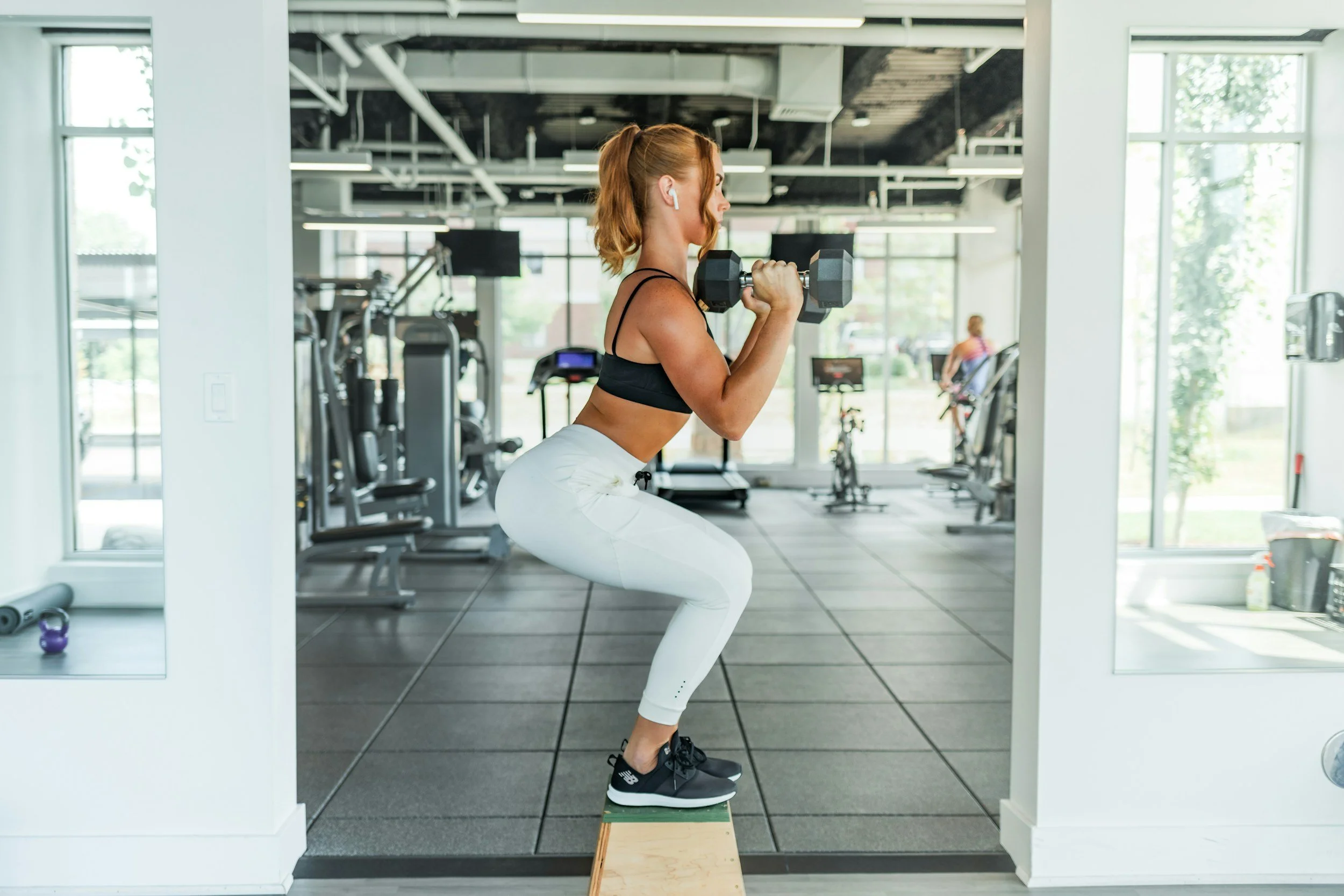
You start where you start:
Bodyweight work
Light dumbbells
Home workouts
That’s fine.
But eventually, you need more load.
That may mean:
Adjustable dumbbells
A barbell and rack
Or joining a gym
And don’t worry — no one is watching you. Everyone is far too obsessed with themselves.
This is one of the best gifts you can give yourself.
You’ll feel:
Strong
Capable
More confident
Slightly embarrassed you didn’t try sooner
Your body will feel better. Your stamina will improve. Some chronic aches may disappear. Your shape will change — shoulders more defined, waist more stable, legs stronger.
You will get injured at some point. You will rehab and keep going. That’s part of being an athlete — and yes, lifting weights makes you one.
Am I Lifting Heavy Enough?
If You’re in a Gym
If you:
Understand and apply progressive overload
Know what reps in reserve means
Train close to failure intentionally
You’re probably lifting heavy enough.
If You’re Training at Home
I strongly encourage investing in adjustable dumbbells that go up to at least 50 lbs each.
You can apply progressive overload at home — especially as a beginner — but eventually you will need more weight.
What Is Progressive Overload?
Progressive overload means gradually increasing the demands placed on your muscles over time.
That can look like:
Increasing weight
Increasing reps
Increasing sets
Improving control and range of motion
The goal is continued adaptation.
A Simple Starter Program
Here’s a basic full-body structure you can do three times per week using dumbbells.
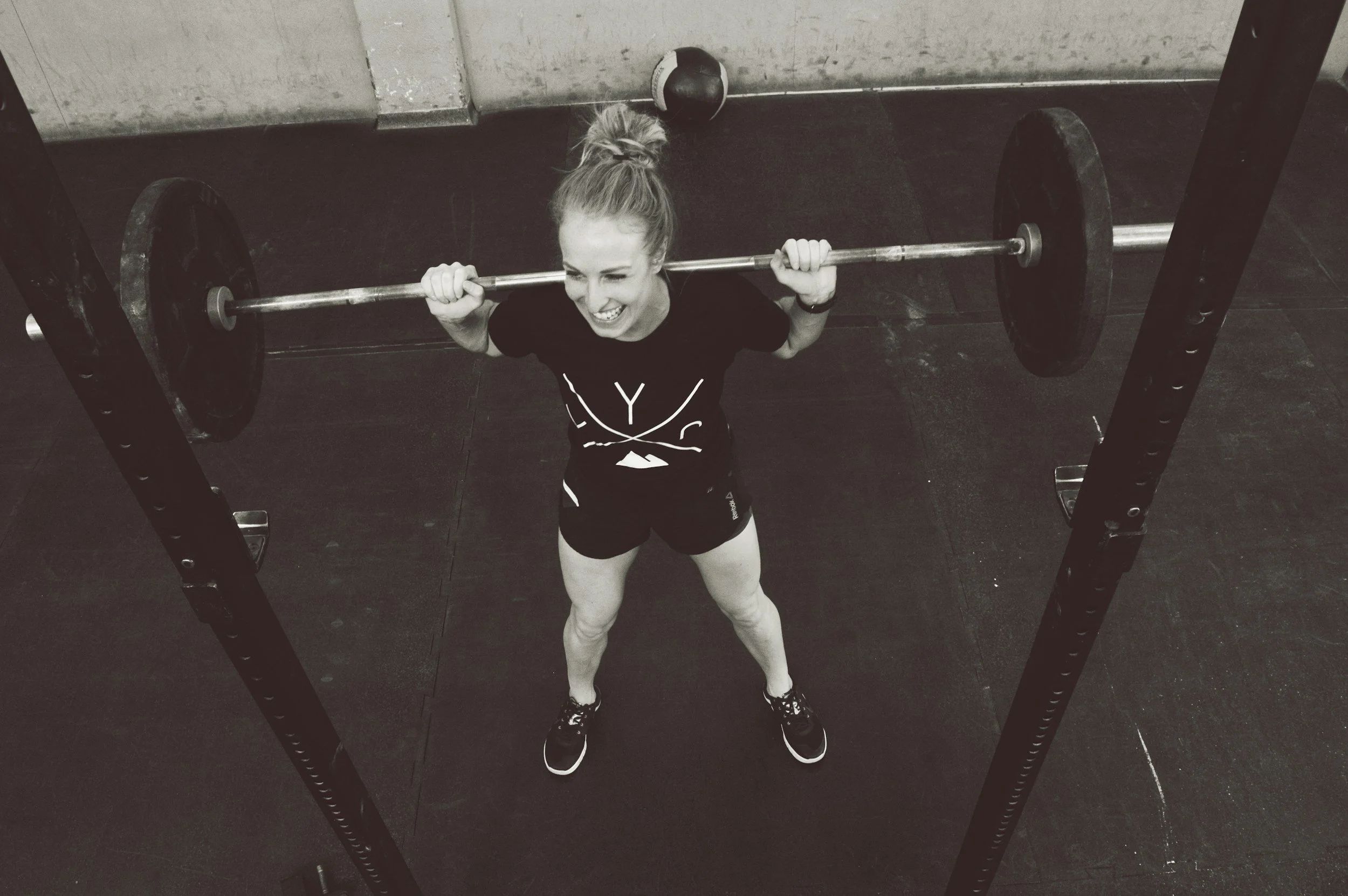
Goblet Squat
25 lb dumbbell, 3 sets of 8–10 reps
alternating with
Dumbbell Overhead Press
15 lb dumbbells, 3 sets of 10–12 reps
Dumbbell Deadlift
Two 25 lb dumbbells, 3 sets of 10–12 reps
alternating with
Bent Over Row
15–20 lb dumbbell, 3 sets of 10–12 reps per side
If this feels easy — you need more weight.
These compound lifts hit most major muscle groups. Additional exercises can be layered in as time and goals allow:
Lunges
Sumo squats
Single-leg RDLs
Biceps curls
Triceps extensions
Push-ups
Pull-ups
Lat pulldowns
Once you can hit 12–15 reps consistently at a given weight, increase the load and drop the reps back down. That’s progressive overload.
Don’t take it from me. Try it.
Frequently Asked Questions About Lifting Heavy for Women
Will lifting heavy make me bulky?
No. Building significant muscle mass requires years of intentional training, sufficient calories, and often favorable genetics. Most women struggle to build muscle — not accidentally overbuild it.
What does “lifting heavy” actually mean?
Lifting heavy means using weights that challenge you within a rep range where you’re close to failure — typically leaving 1–3 reps in reserve.
Is strength training safe for women?
Yes. When done with proper progression and technique, strength training reduces injury risk, improves bone density, and supports long-term health.
How often should I lift weights?
Most women do well with 2–4 strength training sessions per week, depending on recovery, goals, and schedule.
Do I need to go to a gym?
No, but you will eventually need enough weight to continue progressing. This can be done at home with the right equipment or in a gym.
Can I lift heavy during perimenopause or menopause?
Not only can you — you should. Strength training is one of the most powerful tools for supporting bone, muscle, metabolism, and independence as we age.
What if I’m afraid of injury?
Injury risk exists in any physical activity. Strength training, when progressed intelligently, actually reduces injury risk by strengthening muscles, joints, and connective tissue.
What’s the biggest takeaway?
If you want to be strong, lean, resilient, and capable as you age, lifting heavy weights is not optional. It’s foundational.
Start where you are. Progress intentionally. Eat enough. And stop being afraid of muscle — it’s one of the greatest assets you can build.
We plan ahead to optimize outcomes—weddings, vacations, and job interviews. Why wouldn’t we plan to optimize our health before pregnancy? Don’t wait until you’re nauseous and exhausted to realize you need a strategy to eat better, sleep more, and stress less. Pregnancy can be an immense drain on the body, especially one that begins the journey stressed, undernourished, underslept, and exposed to a high level of environmental toxins.
Fertility Foundations is about controlling what we can control. Together, we’ll reduce lifestyle factors that may hold you back from feeling your best and do the work in advance so your body is prepared, resilient, and supported when pregnancy occurs.
This program is ideal for anyone on a fertility journey and is most effective if we have at least 3–6 months before you’d like conception to occur—but it’s also a powerful starting point if you’re earlier in the planning phase. Every change we make together supports your health, the health of your partner, and the health of your future child (and any children already in your home).
I’ll be with you every step of the way. We’ll identify the supports you need, tailor our calls to your priorities and unique situation, and adjust as life or plans shift. Entering pregnancy with a nourished, rested, and less inflamed body can make a meaningful difference in how you feel during pregnancy itself.
This program is not testing-dependent, though functional medicine testing can be added at standard rates if we decide it would be helpful. Testing is not included in the baseline program cost.
Program Details
Length
3.5 months
Meetings & Ongoing Support
Initial Setup Call:
One 60-minute onboarding sessionOngoing Calls:
Two calls per month for the first three months (45–60 minutes each)
One final call in month four (45–60 minutes)
Total Calls: 8
Email Support:
Weekly email support, as needed, for questions and ongoing guidance
Areas of Focus
We’ll focus on preparing your body—and your home—for pregnancy by improving nutrition and lifestyle factors that support fertility and a healthy conception or implantation. Topics may include:
Nutrition, optimized for fertility
Exercise
Stress management
Sleep
Environmental toxins
Supplements
Cycle regulation, if needed
Investment
$1,7000
Some of us may have a new friend in our lives. She’s… unpredictable. A bit chaotic. It doesn’t seem like she’s leaving anytime soon, and we need to figure out how to deal with her.
Meet Peri.
All jokes aside, perimenopause is often described as a time of hormonal chaos—and for many women, that’s exactly what it feels like. In today’s world of full-time jobs, aging parents, kids, school schedules, activities, and running a household, feeling “off” can sneak up on you. Perimenopause can begin 10 or more years before menopause, which is wildly inconvenient, considering these are often the years when women have the least amount of time to stop and figure out what the h*ll is going on.
Let me help.
Spend a little time with me each month, and together we’ll make sense of what’s happening in your body, reduce the overwhelm, and create a plan that actually fits your life.
If you’re in your 30s and suspect you’re just entering perimenopause, we’ll troubleshoot current symptoms, make sure the foundational lifestyle pieces are in place, and prepare you for what’s coming. If you’re in your 40s or 50s and right in the thick of it, we’ll evaluate what’s going on now, troubleshoot symptoms, refer out when appropriate, and focus on the strategies you need right now to feel better.
Areas of Focus
Our work together may include:
Understanding your current symptoms
Understanding the hormonal shifts occurring
Knowing what’s happening now and how things may change over time
Optimizing nutrition
Appropriate and effective exercise for this stage of life
Sleep hygiene
Hormone Replacement Therapy (HRT) education and discussion
Stress management strategies
How to minimize toxins
How to optimize supplements
This program is not testing-dependent. Functional Medicine testing can be added at standard rates if we decide it would be helpful. Testing is not included in the baseline program cost.
Program Details
Duration
3 months
Meetings & Support
Introductory Call:
One 60-minute onboarding sessionOngoing Calls:
Two calls per month for three months (45–60 minutes each)
Total Calls: 7
Email Support:
Weekly email support, as needed, for questions and ongoing guidance
Investment
$1,525
Would you rather do this with a friend? Check out the Add a Friend program instead!
This is the same Very Peri program—just designed for two people instead of one.
Do you have a friend who’s at the same stage of life? Move through the Very Peri coaching experience together and share the journey. You’ll receive the same education, guidance, and support as the one-person program, with the added benefit of a built-in accountability partner who truly gets it.
The topics, framework, and core content are exactly the same as the individual Very Peri program. The difference is that this option is structured to support two participants at once, with individual onboarding and expanded communication support for both people.
You’ll move through the same discussions, education, and practical guidance—together—while still receiving individualized support within the shared sessions.
How the Two-Person Program Works
Both participants attend all coaching calls together
You must be available at the same time (you may join from separate locations)
Coaching is tailored to each individual within the shared sessions
You’ll gain insight into your own perimenopause experience and learn through your friend’s perspective
What We’ll Cover
(Same as the One-Person Very Peri Program)
Understanding current symptoms
Understanding the hormonal process occurring
What’s happening now—and how things may change going forward
Optimizing nutrition
Appropriate and effective exercise for this stage of life
Sleep hygiene
Hormone Replacement Therapy (HRT) education and discussion
Stress management strategies
How to minimize toxins
How to optimize supplements
This program is not testing-dependent. Functional Medicine testing can be added at standard rates if we decide it would be helpful. Testing is not included in the base program cost.
Program Details
Duration
3 months
Meetings & Support
Introductory Calls:
Two 60-minute onboarding sessions (one per participant)Ongoing Calls:
Two shared calls per month for three months (45–60 minutes each)
Total Calls: 8
Email Support:
Up to two emails per week, as needed, for questions and ongoing support
(Emails may be submitted jointly or individually)
Investment
$2,000 total
($1,000 per person)